

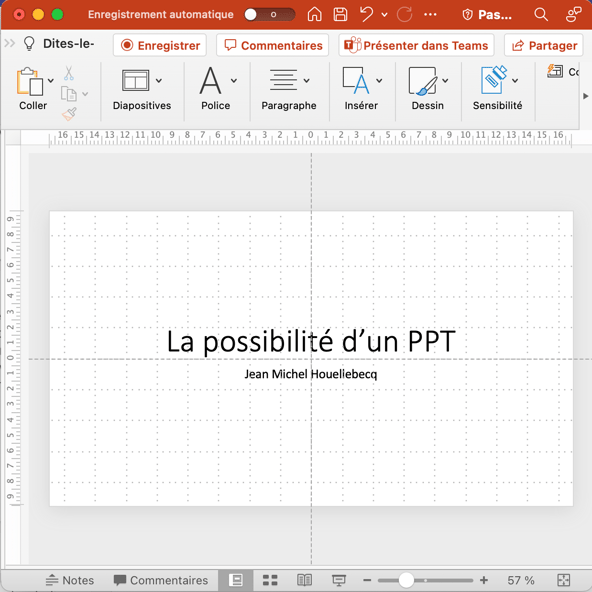
La possibilité d’un PPT is a place to record the stuff I think that doesn't have an immediate client Powerpoint.
Père ManQ, raconte-nous une histoire.
Sir Jon Steel, king du planning.
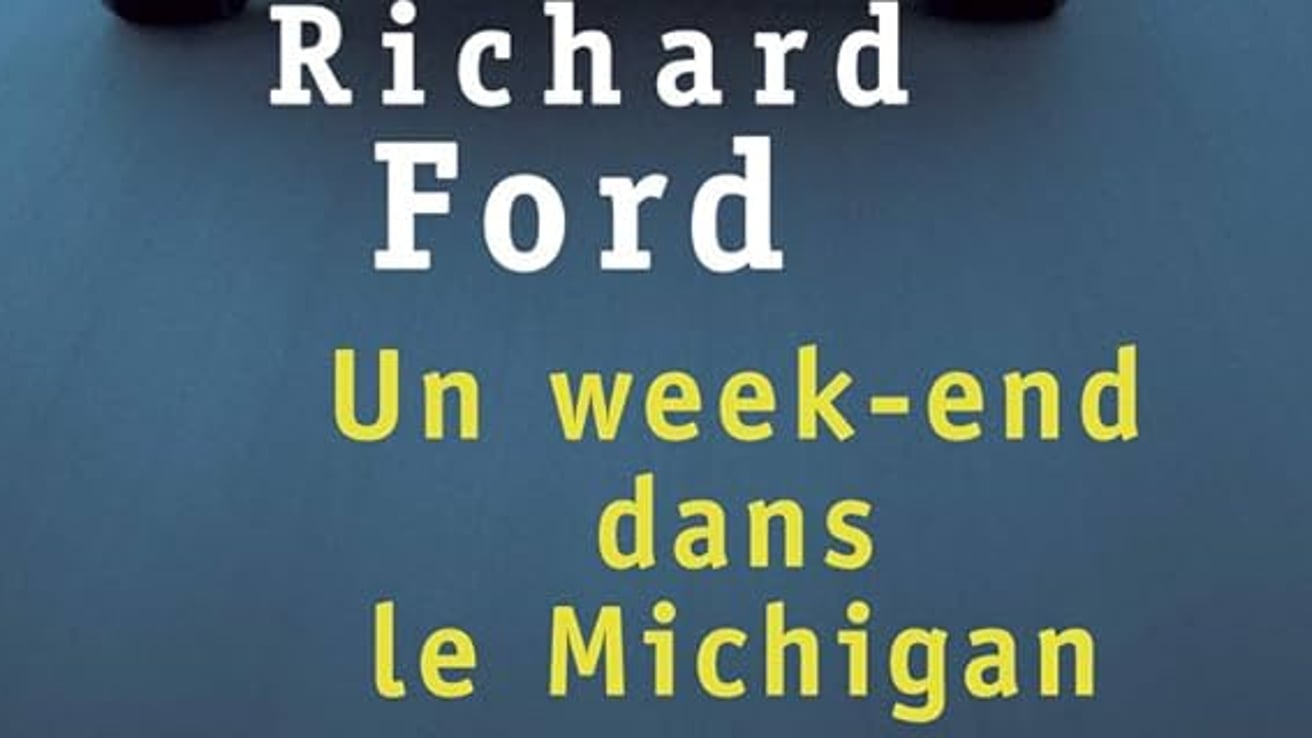
Il n’a pas inventé la discipline (c’est Stephen King, l’autre), ni écrit la bible (c’est toujours King), mais Truth, Lies, and Advertising est en quelque sorte le Nouveau Testament de The Art of Account Planning.
Steel bossait avec Jeff Goodby (à prononcer “bee”, et que j’ai eu la chance de rencontrer, passablement éméché, moi, pas lui, à Cannes il y a quelques années ; il portait une queue de cheval et des Birk, quel mec) et Rich Silverstein (pour la prononciation, voyez avec Jean-Luc Mélenchon).
À eux trois, ils ont, entre autres, créé la campagne Got Milk?, processus largement raconté dans l’ouvrage.
Il y a des passages cultes, notamment le chapitre sur les meilleures accroches de panneaux de SDF à SF, avec le fameux : « Need fuel for Lear Jet. » Ou encore le passage sur comment éviter la peur en avion.
"So you're scared that your plane might be bombed?"
"Yes, I was."
"Well, have you thought about taking your own bomb?"
I looked at him incredulously.
"Here's why," he said, very seriously.
"Can you imagine the chances of there being two bombs on the same plane?"
I did say weird, didn't I?
J’aime aussi cette anecdote :
The first company president I met when I moved to the United States, Bill Johnson of Heinz Pet Products, had a sign above his desk that read, GUTS IS CHEAPER THAN RESEARCH.
L’agence actuelle de Heinz s’appelle… GUT.
Autre plaisir, cette métaphore, flatteuse, sur le métier :
I have always thought of planners like the American Special Forces or British SAS — if they are doing their job properly, nobody knows they are there. The fact that the job gets done is all that is important, and none of them ever get publicly recognized for their work. Officially, they weren't even there.
C’était une lecture mandatory pour tous les plannos pendant des années. Je doute que ce soit encore le cas. Mais si vous êtes sous mon management direct : lisez-le. C’est un ordre.
Considérations et phrases remarquables.
These "new scientists," the pioneers of quantum theory, have an approach to science that fits much more closely with the definition of effective advertising that I previously outlined, focusing on relationships as the basis for all definitions and embracing uncertainty and risk as positive forces, rather than trying to eliminate them.
The planner's role was basically to embrace consumers as partners in the process of developing advertising, to use their input at every stage of the process to inform and sometimes even inspire creative ideas, and to guide and validate the resulting advertising campaigns.
In simple terms, there are three important perspectives that advertising should embrace: the client's business perspective, the agency's creative perspective, and last but not least the opinions and prejudices of the people at whom the advertising will be aimed.
Rich Silverstein likes to use the analogy of those joining-the-dots games that we all played as children, where you draw a line from numbered dot to numbered dot, and when you've finished you have a picture of, say, a warthog. In Silverstein's view, it's not advertising's job to tell people it's a warthog. It should simply join up a few of the dots for its audience and leave the rest for them to join for themselves, thus allowing them to participate.
In a paper delivered to the ADMAP/Campaign Seminar in London in 1990, the late Charles Channon, Director of Studies of the British I.P.A., drew a very important distinction between the concept of effectiveness, which is broadly defined as "doing the right thing," and efficiency, which is about "doing something the right way."
Writing about the music business in Rolling Stone in July 1997, Chris Heath observed that "it is not the plans you think up that make the difference, it is how well you use the accidents." Advertising is not a whole lot different.
Living in the San Francisco Bay Area, one of the most prevalent forms of communication is, unfortunately, that of signs held up by homeless people to attract donations from passers-by. There is one sign that I see perhaps more than any other: "Will Work for Food." Wherever you live, you have probably seen this sign, or one very much like it, and although it is by now so widely used as to be almost invisible, I think that at its heart, it is a very powerful piece of communication.
Need fuel for Lear Jet.
I have no idea why it affected me the way it did, but the human mind is an irrational thing that is sometimes affected in inexplicable ways. As soon as I smiled, a relationship was formed and from that point there was no going back. I gave him five bucks and wished him a safe flight.
"So what exactly is account planning?" I asked through the pall of Dunhill smoke. "Account planning is the discipline that brings the consumer into the process of developing advertising," Cowpe replied. "To be truly effective, advertising must be both distinctive and relevant, and planning helps on both counts."
Planners, he told me, were the architects and guardians of their clients' brands, the detectives who uncovered longhidden clues in the data and gently coerced consumers into revealing their inner secrets, and the warriors who stood up and fought for the integrity of their strategic vision.
I have always thought of planners like the American Special Forces or British SAS -- if they are doing their job properly, nobody knows they are there. The fact that the job gets done is all that is important, and none of them ever get publicly recognized for their work. Officially, they weren't even there.
Some of the most satisfying experiences I have ever had in my work were those few occasions when I subtly suggested something to creatives, and next day they told me that they'd had the idea I suggested to them the day before. Of course I would never let on. A planner's job is to make ideas happen, not necessarily to have those ideas themselves.
The second skill of the planner id to spend more time listening than talking, whether in conversation with consumers, clients, or other agency team members. A good way to think about this is that the ratio of speaking to listening time in a conversation should be the same ratio as the number of mouths to ears that we all possess.
A planner once told me that he thought it was his job to act as a kind of interpreter between three alien species (i.e., creative people, clients, and consumers) who don't have any language in common.
Almost all of the good planners I have known are a little out of the ordinary. This manifests itself in two main ways: in a somewhat off-center perspective on situations and a rather eclectic mix of background and interests.
"So you're scared that your plane might be bombed?"
Yes, I was.
"Well, have you thought about taking your own bomb?"
I looked at him incredulously.
"Here's why," he said, very seriously.
"Can you imagine the chances of there being two bombs on the same plane?"
I did say weird, didn't I?
Y'see, the account people worry about market share; creative fights for ideals; marketing talks socio-economic strata; but account planners represent the consumer." "But what do they do?" his friend asks.
"They look in the cracks, check relevance, persuade the strategic direction, glimpse the obvious ..."
"But what do they do?" "
... set up opportunities and challenges, get into people's heads, find out what makes them tick, find their real triggers...
"B-but what ..."
"On the other hand, some agencies do fine without account planners."
It's perhaps not surprising that so much research starts from this somewhat myopic position. After all, if you work in a toilet paper company, you spend every waking hour, and probably a considerable proportion of your dreamtime besides, thinking about things like softness, absorbency, and number of squares per roll, and they take on a disproportionate importance in your life. It's perhaps only natural that you assume a similar level of knowledge, interest, and enthusiasm in the outside world and take that as your starting point for research. In my old agency in London, there was a famous story (which I believe to be true) about a client from Nabisco, who was responsible for a chocolate-covered biscuit (cookie) called Club.
He briefed the agency one day on a product improvement, the result of new technology that allowed an extra half-millimeter of chocolate to be added all around the biscuit. To say he was flushed with excitement would be an understatement.
He waxed lyrical about the technology that was making it all possible and talked of a response from the British public to this great advance that would be little short of life changing. Housewives would be beating down the doors of the grocery stores once they realized that Club's chocolate was layered thicker than they had ever dreamed possible.
He was abruptly pulled out of his fantasy by one of the agency planners, who said, "John, excuse me for saying this, but ... but ... it's only a fucking chocolate biscuit."
In Thriving on Chaos, the management guru Tom Peters wrote that "Inspiring visions rarely (I'm tempted to say never) include numbers," and I am inclined to agree. Unlike many account planners, I am a great believer in the use of numbers to analyze and define the extent of a problem. I always use numbers to corroborate findings from qualitative research, but I have yet to experience a situation where numbers actually provided the inspiration for a great advertising campaign.
Somehow, without a number there is something missing, and that something is probably the truth.
"The reason that men oppose progress," wrote Elbert Hubbard, "is not that they oppose progress, but that they love inertia,"
The realgiants have always been poets, men who jumped from facts into the realm of imagination and ideas. Bill Bernbach
The first company president I met when I moved to the United States, Bill Johnson of Heinz Pet Products, had a sign above his desk that read, GUTS IS CHEAPER THAN RESEARCH.
It is far too easy to take products at face value and think "this is a car," or "this is an insurance policy," but it is often possible to find a way of talking about them that raises them onto a higher plane, and most important, out of the morass of competitive activity. It's an interesting exercise with any product. Just imagine a scenario where some new law has been enacted that prevents you from calling your product, say, a "car" or a "camera." What else could you call it that would have some credibility? In the case of UNUM, or the Northern California Honda Dealers, or the campaigns for Polaroid or Norwegian Cruise Line referred to in later chapters, defining the product outside traditional category boundaries changed the rules of engagement and allowed the companies to compete on what they did best, avoiding areas of potential weakness or competitive activity. This doesn't work for everyone, but when it does, it can be very potent.
Oscar Wilde once said that "we [the British] have really much in common with America nowadays, except, of course, language."
Webdter'd defines creativity as 1. the state or quality of being creative. 2. the ability to create meaningful new forms, interpretations, etc.
If my life depended on picking which is more likely to be true, (1) what people say with their eyes, posture, and attention, or (2) what they say with their words, I would choose (1) every time.
Jeff Goodby, speaking at a conference of account planners in New York in 1995, described creative briefing using a fishing analogy. The brief, he said, is the equivalent of a fisherman's guide -a person who takes you to the best place on unfamiliar water, shows you where to fish, and has some ideas about the best flies to use.
The bottom line is, you don't have a good brief until you have a good ad.
On the subject of good fortune, though, an old sporting adage asserts that "luck is what happens when preparation meets opportunity." So maybe any luck that came our way was not entirely accidental.
As my old boss in London used to say, "you don't have a strategy until you have an ad."
As Albert Szent-Gyorgyi, the Nobel laureate biochemist, once put it, "Discovery consists of looking at the same thing as everyone else and thinking something different." And that is the essence of planning.