

La possibilité d’un PPT is a place to record the stuff I think that doesn't have an immediate client Powerpoint.
Père ManQ, raconte-nous une histoire.
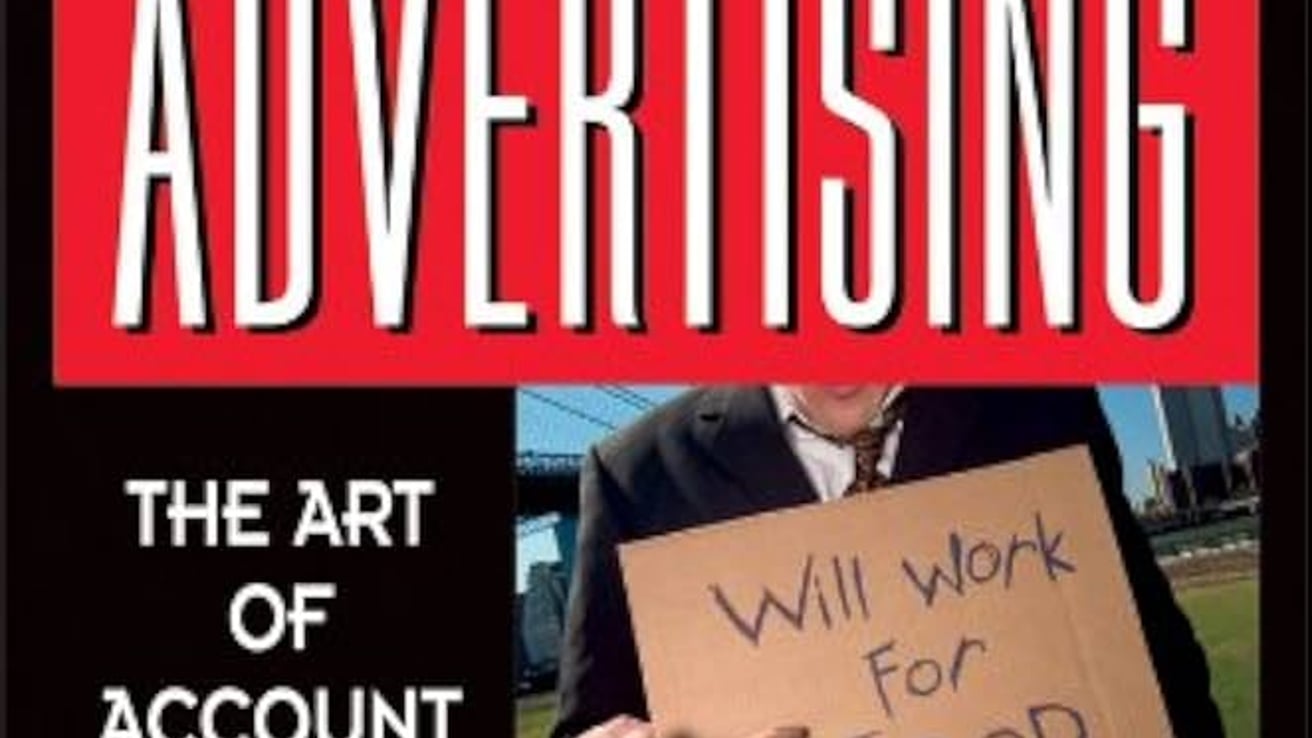
Richard Huntington est le boss du planning strat de Saatchi & Saatchi Londres depuis 17 ans.
Dans l’industrie depuis 1990, il est de fait un solide candidat à l’entrée dans le plus prestigieux des cercles : celui des publicitaires qui quittent le métier par la grande porte du pot de départ à la retraite.
J’en ai connu qu’un en 15 ans, qui d’ailleurs ne s’est même pas pointé à son propre pot de départ.
Contrairement à Richard Huntington, il n’a pas écrit un testament de100 pages pour expliquer que le secret de la stratégie de marque, est tout entier contenu dans ces deux mots : "savoir improviser” (et d’autres bricoles que j’ai résumés sous forme de commandements ci-dessous), mais un simple email qui résumer l’éthique qui l’a guidée pendant 40 ans.
Cela sonne comme du Steve Carrel dans The Office mais en quittant ce métier, atteint par ma propre date de péremption, ce sont pour moi des gens, c’est à dire vous, dont je m’éloigne. Et, oxymore quand tu nous tiens, moi qui n’aime pas les gens je n’ai pourtant aimé dans ce métier que les gens qui le faisaient.
Quand en 1988 je suis entré dans ce qu’on appelait encore la « pub », ce fut totalement par hasard. J’avais à l’époque renoncé à toute idée de carrière et le rêve de « réussite professionnelle » me semblait (et me semble toujours) synonyme de ce qu’un célèbre juif allemand (un oxymore aux yeux de gens auxquels on peut quand même reconnaître le mérite d’avoir permis à Bill Bernbach de faire ses plus fameuses campagnes) appelait l’aliénation. Mais souffrant du plus honteux des défauts, je veux bien sûr parler de l’absence de fortune personnelle, j’étais condamné (sans possibilité jusqu’à aujourd’hui de libération anticipée) à gagner ma vie, la pub s’est alors avérée la pire solution à l’exception de toutes les autres pour paraphraser un rédacteur anglais alcoolique (on vient de passer de l’oxymore au pléonasme.) Ai-je eu la révélation ? Me suis passionné pour ce métier ? Ce n’est pas un scoop : jamais. Et je suis fier de dire que personne ne m’a jamais vu professionnellement enthousiaste (enthousiasme étant après pauvreté et juste avant hémorroïdes un des mots que je hais le plus). Pourtant mu par une morale dite hawksienne ( tu as passé un contrat, c’est à dire engagé ta parole, tu l’honores ) je pense l’avoir fait consciencieusement. Avec insincérité sans aucun doute mais avec honnêteté je l’espère : always committed, never involved.En revanche (on peut être marxiste et pas très « par contre », c’est sans doute ce qu’on appelait jadis la gauche caviar) ce qui m’a ravi fut de découvrir que ce boulot pas franchement captivant se faisait avec des gens avec lesquels il était amusant, voire excitant, de le faire. Des gens qui n’avaient pas des têtes de « collègues de bureaux » un terme qui dans mon Panthéon inversé caracole juste derrière (c’est le cas de le dire) hémorroïdes. Des gens avec qui on pouvait être amis, avec qui parfois on pouvait coucher et même dont on pouvait tomber amoureux ( ce qui n’empêche pas d’ailleurs forcément de coucher ). Des gens tels que la séparation entre la vie professionnelle et la vraie vie – ce qui est l’expression même de l’aliénation- était au moins partiellement gommée. Des gens avec lesquels en dehors des heures de boulot ou plus précisément des phases de boulot, il était implicitement entendu que parler boulot ne serait jamais une option. Et des gens qui malgré tous mes mauvais côtés (en dehors du pire, l’absence de fortune personnelle) se montrèrent pour la plupart amicaux (on ne passe pas tant de temps dans la pub sans rencontrer aussi un paquet de fils de pute), généreux et surtout indulgents « even in my darkest hours ». Des gens que je remercie pour leurs délicats présents pour celui qui se retire doucement et les embrasse. Et auxquels, l’originalité étant une valeur très surestimée, j’adresse mes meilleurs vœux.
Dans les conseils de Richard Huntington on retrouve pas mal de conseils que j’ai reçu de lui.
L’intérêt de la country (la vraie, Randy Travis & co) pour comprendre les gens et apprendre à écrire “vrai”, l’impérative chasse aux dead métaphores / facts dans la rédaction, le mépris des études déclaratives, l’importance de la culture (il ne se présentait pas comme planner mais comme homme du monde), d’être intéressant plutôt que d’essayer d’être juste (ça va avec la culture), de ne jamais faire de présentation mais toujours un show : c’est ton putain de moment, enjoy et de placer la fierté personnelle de son travail (et des papillons dans le ventre qu’il doit provoquer) comme seul objectif valable de la journée. Si t’es fier de ce que tu as fait c’est que ça doit être bien.
Walthère me manque.
Comme promis, les 10 commandements du bon planner par Richard
1. Reject the four horsemen of mediocrity.
Orthodoxy and accepted wisdom. Losing grip of reality and real life. Distance and disrespect for people. Plain old dogma.
These are your enemies. Hunt them down.
2. Always start with you.
No one’s experiences are remotely representative of anyone else’s, but when you know or feel something yourself, through your direct experience, you know that feeling or behaviour is genuine.
3. Be radical.
Radical doesn’t mean revolutionary. It’s a horticultural term, from the Latin radix, meaning root.
Get to the root cause of the problem. Solve what lies beneath, not what floats on the surface.
4. Scratch everywhere.
Scratching is how a strategic idea starts.
Scratch here, scratch there. Stakeholder interviews, data, books, conversations – whatever helps you begin.
5. Make every part of your strategy insightful.
Rather than looking for an insight, make sure every part of your strategy is insightful.
Insight isn’t something you chase down and label. It’s how you think about what everyone else already sees.
6. Kill dead metaphors.
Orwell hated convoluted language and dead metaphors.
Avoid “toe the line”, “stand shoulder to shoulder”, “Achilles’ heel”. Speak clearly and think freshly.
7. Walk in stupid.
Dan Wieden implored people to “walk in stupid” every day.
Your naivety, inexperience, and stupidity are your greatest assets in finding new and interesting perspectives.
8. Improvise with what’s around you.
Improvisation is about creating something new using only the tools and materials around you.
What you really have is every experience in your life. Use it.
9. Give a shit.
Passion means giving a shit – and it’s infectious.
If your thinking doesn’t move you, it won’t move anyone else.
10. Treat strategy as performance art.
Strategy is a performance art.
It’s not about writing decks. It’s about making people feel something. Make it interesting – it's much easier than being right.
Citations et idées remarquables.
The ultimate hidden truth of the world is that it is something that we make and could just as easily make differently.
David Graeber, The Utopia of Rules
Strategy is a terribly big word, big and intimidating but it's very simple: strategy is just about having a plan.
A brand is the set of associations people have in their minds about a product, service, business, organisation, movie franchise or even a country. In other words, there is nothing tangible about a brand: it exists only in the minds of people.
If you bring these two concepts together, brand strategy is a plan to improve the associations people hold in their minds about something.
Over twenty years my personal blog has become a place to record the stuff I think that doesn't have an immediate client home.
Always Start with You
Brand strategists live in cultural and social bubbles. Everyone does.
No one's experiences are remotely representative of anyone else's, but when you know or feel something yourself, through your direct experience, you know that feeling or behaviour is genuine.
George Orwell hated convoluted language and dead metaphors - those that have lost their meaning such as 'toe the line, 'stand shoulder to shoulder with', or 'Achilles' heel'.
A former boss asked planners to do two things: create strategies that revealed something about the brand or category that he had never heard before; and define the target audience in ways that made him love and respect them.
Rather than looking for an insight or insights, I try and make sure every part of my strategy is insighful
I do not believe you can solve problems without being radical. Radical doesn't mean revolutionary. l's horticultural term, from the Latin word radix, meaning root. So, to be a radical means to get to the root cause of a problem and find solutions beyond the superficial.
Every business has a problem, every organisation has something from which it needs to be liberated. Think of it like a solar eclipse where the real problem is the belief or perception that obscures the truth of a brand from people's sight, and which needs removing - just as the moon eventually moves from obscuring the sun at the end of a solar eclipse.
Understanding the fundamentals of a category or brand means getting to grips with its essential nature.
I don't mean what your research says about generic category motivators - some combination of price, service and value I'd guess. I mean why your category or brand exists and what it is doing for people.
Fundamentals are not the same as purpose. An organisation's purpose should be specific to that company, whereas fundamentals tend to operate at the category level.
According to the Oxford English Dictionary, use of the word Insight has increased significantly in the past forty years, so insight is now in the top 5,000 words in written usage like rain or sand.
The Oxford English Dictionary (OED) describes it as:
The fact of penetrating with the eyes of the understanding into the inner character or hidden nature of things; a glimpse or view beneath the surface; the faculty or power of thus seeing.
Insight isn't something you can go chasing after, like a nineteenth century butterfly hunter eager to capture a new specimen, so he can label it and add it to his collection. Instead, you need to look for observations and perspectives that are insightful.
Therefore, the problem is not so much, to see what nobody has yet seen, but rather to think concerning that which everybody sees, what nobody has yet thought. For this reason, it also takes very much more to be a philosopher than a physicist.
Schopenhauer, Short Philosophical Essays
Do You Like Scratching?
Scratching is the process of searching around for a starting point for your strategic idea. You can call it research, reading, analysis or immersion but I love the idea of scratching.
Scratching is how a strategic idea starts. You scratch here, you scratch there, you scratch away at everything you can, just to get a first thought or the germ of an idea.
Where to Scratch?
You may have favourite places to scratch. Some strategists like talking to experts - others prefer analysing customer data. Some like running quantitative surveys, others undertaking qualitative research, or reading everything that has ever been written on the subject.
I'm a fan of stakeholder interviews. If you want to get to grips with the soul of an organisation, a few hours spent listening to a handful of people at every level of a business is invaluable for scratching
An idea I have adopted recently to help my scratching is to appoint a hero' book for a project. I's not there to give you the answer, but to coach you and introduce new ideas and thinking.
Improvisation is about creating something new using only the tools and materials around you. Most of us are familiar with improvisation in art and culture: improvised music uses only the instruments the musicians have with them and nothing else; improvised theatre uses only the actors on the stage; and improvised comedy uses only the comedian and their audience.
What we tend to forget is that the greatest tool they really have is not an instrument or the audience, it's every experience in their lives.
I am not asking this high price for a brief amount of work. I ask it for the knowledge gained through the efforts of a lifetime.
Rather than trying to be right all the time, simply try to be interesting, it's much easier and more fun.
that strategy is a performance art and is not about writing and giving presentations.
Passion trumps virtually anything, passion is the key to rewilding your brand strategy. To me, passion means giving a shit, and it's infectious.
If you want to build brands that move people, that connect with them on a fundamental level then you must be moved by your thinking and ideas.
Brand strategy is a performance art, and the quality of your performance will have a direct effect on the endorsement and adoption of your strategy.